Search for:
Minimum Fish Sizes in Mediterranean Spain: Full Guide

Every angler fishing in Spanish Mediterranean waters is legally obligated to understand and comply with the minimum size regulations for all species they target. These rules — established under EU and Spanish national law and regularly updated — define the minimum size at which a fish may legally be retained. Fish below these sizes must be returned to the sea immediately and carefully. Understanding minimum fish sizes in Spain’s Mediterranean is not only a legal requirement: it is the foundation of responsible, sustainable angling that protects the fish populations that make Spain’s coastline one of Europe’s finest sea fishing destinations.
The Legal Framework: Spanish and EU Fishing Regulations

Recreational sea fishing regulations in Spain operate under a layered legal framework:

  • EU Level: EU Regulation 2019/1241 (Technical Measures Regulation) establishes baseline minimum conservation reference sizes (MCRS) for commercially and recreationally important species throughout EU waters. These are the absolute floor — member states cannot set lower minimums.
  • National Level: Real Decreto 347/2011 and subsequent amendments regulate recreational maritime fishing in Spain, setting size limits, bag limits, and gear restrictions at national level.
  • Regional Level: The Generalitat Valenciana (governing the Alicante/Torrevieja area) and Region de Murcia may impose additional restrictions more protective than the national baseline. Always check both national and regional regulations for your specific fishing location.

Enforcement is carried out by the Guardia Civil (Servicio Marítimo and SEPRONA — the nature protection service), Policia Local, and regional maritime surveillance vessels. Inspections at marina dock returns, on the water, and at shore fishing spots are increasingly common, particularly during summer months.

Official Minimum Fish Sizes: Mediterranean Spain Reference Table

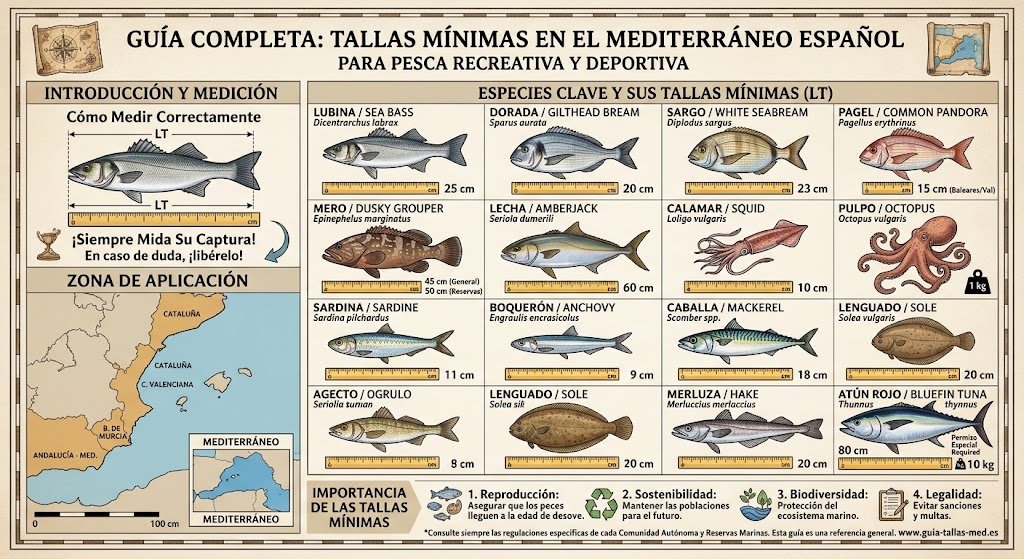
The following table presents the most current minimum sizes for species commonly targeted by recreational sea anglers on Costa Blanca and the wider Mediterranean coast of Spain. Sizes are total length (tip of snout to end of tail fin) unless otherwise specified.

SpeciesSpanish NameMinimum Size
Gilthead SeabreamDorada (Sparus aurata)20 cm
European Sea BassLubina (Dicentrarchus labrax)25 cm
Dusky GrouperMero (Epinephelus marginatus)45 cm
Common DentexDentón (Dentex dentex)25 cm
Atlantic BonitoBonito (Sarda sarda)30 cm
Little TunnyMelva (Euthynnus alletteratus)30 cm
European AnchovyBoquerón (Engraulis encrasicolus)9 cm
European PilchardSardina (Sardina pilchardus)11 cm
Common SoleLenguado (Solea solea)24 cm
Red MulletSalmonete (Mullus surmuletus)11 cm
Greater AmberjackServiola (Seriola dumerili)70 cm
European SquidCalamar (Loligo vulgaris)10 cm (mantle length)
Common CuttlefishSepia (Sepia officinalis)10 cm (mantle length)

Species Subject to Zero-Retention Rules: Bluefin Tuna

Atlantic Bluefin Tuna (Thunnus thynnus) — known in Spain as Atún Rojo — is subject to some of the most stringent restrictions in Mediterranean fishing regulations. Bluefin populations in the Mediterranean suffered catastrophic commercial over-exploitation through the 1990s and early 2000s, falling to less than 20% of their historical abundance. EU-mandated recovery plans implemented since 2010 have produced genuine population recovery, but recreational fishing access remains highly restricted.

For recreational anglers in Spain:

  • Zero retention is the default rule: Recreational anglers fishing without a specific catch-and-release authorisation (Annex III permit, issued annually in limited numbers by the Secretaría General de Pesca) may not retain or kill any Atlantic Bluefin Tuna, regardless of size.
  • Accidental capture: If a Bluefin Tuna takes your bait while you are legitimately targeting other species, you must release it immediately and carefully. Document the catch photographically if possible and report it via the Sistema de Información de Pesca Recreativa.
  • Organised recreational Bluefin tournaments require specific national and EU authorisation and are subject to strict reporting requirements including mandatory observer presence on vessels.

The Overall Bag Limit: How Much Can You Keep?

Spanish recreational sea fishing regulations impose a daily bag limit of 5 kilograms per person per day plus one additional piece (the ‘one piece’ allowance accounts for a large fish that would push the total over 5 kg if retained whole). This bag limit applies to the combined total of all species retained — it is not a per-species limit.

Specific species may have additional individual limits. Sea bass (lubina) is limited to 3 fish per day per angler on the Atlantic coast — check current regulations for Mediterranean-specific bass limits as these have changed in recent years.

Catch and Release Best Practices in Mediterranean Conditions

Warm Mediterranean water temperatures — particularly from July through September when surface temperatures exceed 25°C — significantly reduce the survival rates of released fish if they are handled improperly. Dissolved oxygen content decreases as water temperature rises, meaning fish already stressed from the fight have less oxygen available for recovery. Best practices for responsible release in warm Mediterranean summer conditions:

  • Minimise fight time: Use adequately strong tackle to land fish quickly. Prolonged exhaustion depletes lactic acid buffers and increases post-release mortality dramatically.
  • Keep the fish in the water during hook removal wherever possible. Lip-grip tools allow hook removal and a brief vertical hold without fully extracting the fish from the water.
  • Wet your hands before handling any fish to avoid removing the protective mucus layer that defends against infection.
  • Never release a fish by dropping it from height — lower it gently to the water surface, hold horizontally, and allow it to swim away under its own power.
  • Deep-water catch-and-release: Fish caught from depths exceeding 20 metres suffer from barotrauma (swim bladder expansion due to pressure change). Do not release deep-caught fish that float on the surface — use a release weight (a device that takes the fish back to depth where it can re-equilibrate) for best survival outcomes.

Inspections and Penalties

Guardia Civil SEPRONA (environmental protection officers) conduct both on-the-water checks and inspections at marina arrivals. Anglers returning to marina quays with fish on board should be prepared to present their fishing license and allow inspection of their catch for size compliance. Officers have the authority to measure all retained fish and issue on-the-spot fines for undersized specimens.

Penalties under Spanish maritime recreational fishing law:

  • Minor infraction (undersized fish, minor gear violation): €150–1,500 fine
  • Serious infraction (significant bag limit excess, prohibited gear use): €1,500–15,000 fine
  • Very serious infraction (prohibited species retention, deliberate harm to protected marine species): €15,000–150,000 fine and potential criminal prosecution

🧭 GUIDE & FAQ: Minimum Fish Sizes in Spain

Q1: Where do I measure the fish — from where to where?

Total length is measured from the tip of the snout (closed mouth, fish lying flat) to the longest point of the tail fin (with the tail fin closed in its natural position, not spread). For cephalopods (squid, cuttlefish), mantle length is measured from the posterior end of the mantle to the anterior edge, not including the tentacles. Carry a simple folding fish ruler on every fishing trip.

Q2: Are minimum sizes the same along all Spanish Mediterranean coasts?

National and EU baseline minimums apply throughout Spanish Mediterranean waters. However, regional governments (Generalitat Valenciana, Region de Murcia, Catalonia) may impose stricter local protections for certain species or in certain marine protected areas. Always check regional rules for the specific autonomous community where you are fishing. Regional fishing regulations are available from the respective regional fisheries departments and in most large Spanish fishing tackle shops (tiendas de pesca).

Q3: Can I photograph and release a species like grouper or dentex without a license?

Yes. Catch-and-release fishing in Spain is legal and does not require special authorisation (except for Bluefin Tuna, which requires Annex III permit even for touch-and-release). You do need a recreational fishing license (Clase 2 for boat fishing) regardless of whether you retain your catch or not. See our detailed guide on getting a sea fishing license in Spain for the application process.

Q4: Are there protected marine reserves near Torrevieja where fishing is restricted?

Yes. The Reserva Marina de la Isla de Tabarca (established 1986) is Spain’s oldest marine protected area and has specific zones where recreational fishing is restricted or prohibited. The internal reserve zone around the island core prohibits all fishing. The buffer and general regulation zone allows recreational fishing but with stricter size limits and gear restrictions than the open sea. Always obtain the current reserve regulations before fishing near Tabarca. Other marine reserves exist along the Alicante coast — check the Spanish Ministry of Agriculture and Fisheries website for current boundaries and restrictions.

Q5: What happens if I accidentally keep an undersized fish without realising it?

If you discover a fish in your catch that is below minimum size before inspection, return it to the sea immediately. If an inspector finds an undersized fish during a check, cooperating fully and demonstrating genuine unawareness generally influences the outcome — inspectors in Spain have discretionary authority on minor infractions. However, the legal obligation is clear: any undersized fish must be released immediately. Ignorance of the regulations is not a legal defence. Carry a fish ruler and check every fish before placing it in your cooler.

For more sea fishing guides in Spain, explore the FreeWIND Sea Fishing section. For nautical and maritime services on the Costa Blanca, visit seamen.es.
Surfcasting vs Boat Fishing in Spain

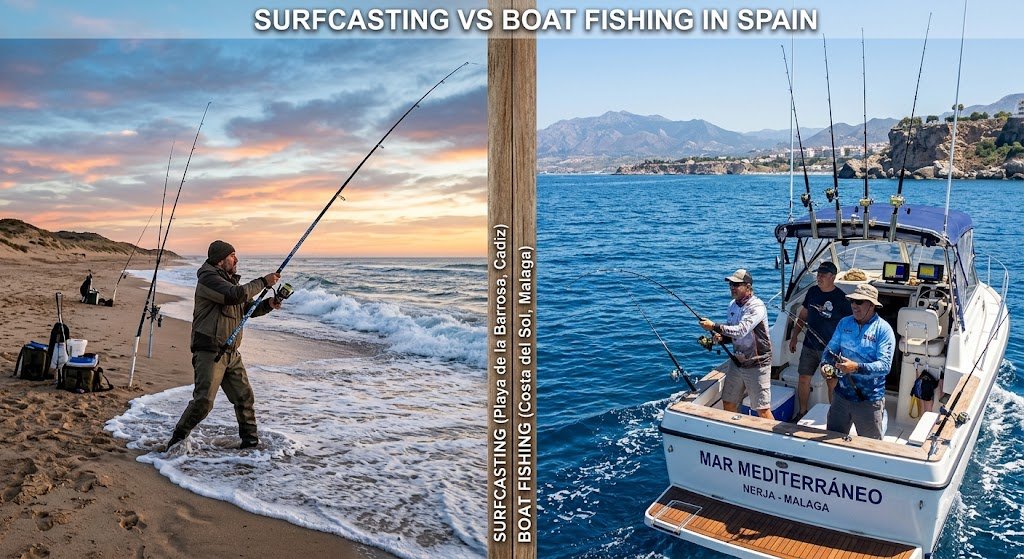
Choosing between shore-based angling and offshore vessel expeditions is one of the most common dilemmas for anglers arriving on the Iberian Peninsula. When weighing surfcasting vs boat fishing Spain along the sun-drenched waters of Costa Blanca (Alicante, Torrevieja, Santa Pola), both modalities deliver exhilarating sport, but they demand vastly different financial investments, tackle configurations, legal permits, and tactical knowledge.

While surfcasting allows you to walk onto a golden Mediterranean beach at sunset with rod holders and sand spikes, boat angling grants access to deep drop-offs, underwater canyons, and offshore pelagics beyond casting range. This guide compares expenses, target species, summer regulations, gear essentials, and practical trade-offs to help you decide which style suits your maritime adventure.

Surfcasting in Spain: Beach Logistics and Coastal Regulations

Surfcasting enjoys immense popularity across Spain. With thousands of kilometers of coastline, finding accessible sandy beaches and shingle shores is easy. However, shore angling comes with distinct logistical considerations:

  • Summer Curfews (Bathing Season Regulations): During peak tourism months (June to September), Spanish municipal ordinances strictly ban beach angling during daytime bathing hours. Surfcasting is permitted only between 21:00 and 09:00 (or once municipal lifeguards lower flags and swimmers depart). This turns summer surfcasting into a nocturnal pursuit under moonlit skies.
  • Casting Distance & Mechanics: Mediterranean beaches often shelve gently. Reaching productive feeding zones (100 to 160 meters offshore) requires 4.2 to 4.5-meter three-piece carbon rods, low-diameter mainlines (0.14 mm to 0.18 mm nylon with tapered shock leaders), and aerodynamic casting techniques like the Off-The-Ground (OTG) or pendulum cast.
  • Beach Mobility: Experienced surfcasters utilize heavy-duty beach carts (carros de pesca) with balloon sand wheels to haul long rod holders (pinchos), tackle boxes, bait coolers, and folding chairs across soft sand.

Boat Fishing in Spain: Sonar Tactics, Drift, and Pelagics

Heading out onto Mediterranean waters by motor vessel or sports fishing boat bypasses coastal beach crowds and opens up entirely new marine territories:

  • Access to Deep Structure: Depth drops rapidly off capes like Cabo de Santa Pola and Cabo Cervera. Boat anglers easily reach rocky reefs, wrecks, and drop-offs at depths from 30 to over 150 meters, holding apex predators that never venture near surf beaches.
  • Marine Electronics: Modern CHIRP sonar, GPS chartplotters, and down-scan imaging eliminate guesswork, pinpointing baitfish schools, underwater drop-offs, and bottom transitions accurately.
  • Anchoring vs Drift Fishing: Depending on wind and current, skippers anchor over isolated pinnacles or deploy a sea anchor (ancla de capa) to control drift speed while slow jigging, working inchiku lures, or bottom bouncing natural sardine baits.
  • Pelagic Trolling (Curricán): High-speed offshore trolling allows boats to cover miles of open sea, intercepting migratory pelagic schools of Atlantic bonito, mahi-mahi (llampuga), and albacore.

If you do not own a vessel in Spain, maintaining private boats, marina berths, insurance, and fuel can be demanding. Booking a skippered charter or hiring a well-equipped vessel through verified providers like SEAMEN maritime services provides full offshore access with expert guidance and zero ownership overhead.

Species Accessibility Breakdown: Beach vs Offshore

The species you can expect to encounter differ substantially between the two disciplines:

  • Surfcasting Primary Targets: Gilthead Seabream (dorada), Sand Steenbras (herrera), European Seabass (lubina), White Seabream (sargo), flatfish, and coastal rays. These species forage in sandy depressions and surf breaks.
  • Boat Angling Primary Targets: Dentex (dentón), Dusky Grouper (mero), Red Pandora (pagel), Blackspot Seabream (besugo), Atlantic Bonito, Little Tunny (bacoreta), Mahi-mahi (llampuga), and Amberjack (serviola).

Gear, Licensing, and Financial Investment Comparison

Budget and logistics play a major role when deciding between shore and boat fishing:

  • Licensing: Surfcasting requires an individual Clase 1 shore license (€12 to €28 for several years). Boat angling requires a Clase 2 boat license (or booking a commercial vessel with a collective charter license).
  • Surfcasting Investment: A competitive two-rod beach setup (quality 4.2m rods, high-capacity surf reels, line, tripod/spikes, beach cart, and terminal tackle) costs between €350 and €900. Ongoing expenses are minimal, limited to fresh worms, lead sinkers, and hooks.
  • Boat Angling Investment: Boat ownership involves substantial recurring costs: vessel purchase, mooring fees in local marinas (€2,000 to €6,000+ annually), engine servicing, fuel, and safety gear. Alternatively, chartering a private sports fishing boat for a half-day costs between €400 and €800, split among friends.

The Hybrid Approach: Which Style Should You Choose?

For visiting anglers, expats, and residents along Costa Blanca, a hybrid strategy offers the best of both worlds:

  • Weekly Shore Sessions: Invest in a reliable surfcasting or coastal spinning outfit for spontaneous evening sessions after work or weekend night trips along local beaches.
  • Seasonal Offshore Charters: When the autumn pelagic migration arrives (September to November), pool resources with fellow anglers to charter a dedicated fishing boat for offshore bonito and dentex.

To learn more about Mediterranean fishing methods and gear selection, explore our FreeWIND Sea Fishing section and read our overview on Mediterranean species, techniques, and charter trips.

Frequently Asked Questions About Surfcasting vs Boat Fishing in Spain

1. Can I fish from beaches during the day in summer in Spain?

Generally no. Between June and September, municipal beach regulations prohibit angling while swimmers and sunbathers are present. Fishing is allowed only from 21:00 to 09:00, or in remote rocky coves away from official bathing zones.

2. Is boat fishing more productive than surfcasting in the Mediterranean?

Boat fishing typically yields higher numbers and larger pelagic species (bonito, dentex, grouper) because vessels access deep structure. However, surfcasting remains the premier method for targeting specimen dorada and sea bass in surf shallows.

3. Do I need separate licenses for surfcasting and boat fishing in Spain?

Yes. Spanish maritime recreational permits are divided into Clase 1 (from shore) and Clase 2 (from boat). If you fish from both the beach and your own private vessel, you must hold both endorsements.

4. Can I use a kayak for sea fishing in Spain?

Yes, kayak fishing is very popular. You must hold a Clase 2 (boat) recreational license, wear a certified life vest, carry mandatory safety gear, and remain within approved coastal distances.

5. Where can I find professional fishing boat charters on Costa Blanca?

Reputable maritime platforms like SEAMEN connect anglers with certified boat skippers, vessel charters, and marine logistics in Alicante, Torrevieja, and surrounding marinas.

Squid Fishing (Eging) in Spain: Pro Tips

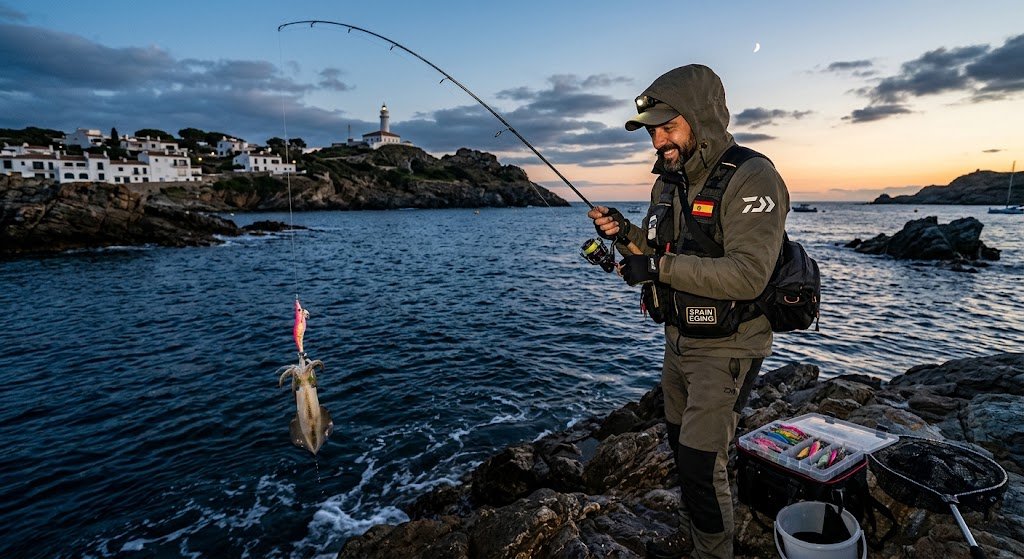
Originating in Japan and embraced across the Mediterranean, the art of eging—lure angling for cephalopods with specialized prawn jigs (egis)—has transformed coastal fishing. When targeting squid fishing in Spain along Costa Blanca (Torrevieja, Santa Pola, Alicante, Calpe), anglers discover an exciting discipline combining light tackle, subtle bite detection, and exquisite culinary rewards.

As Mediterranean waters cool from late October through February, European Common Squid (calamar) migrate from offshore depths into coastal shallows and breakwaters under cover of dusk. Adapting Japanese eging methods to Spanish conditions produces consistent action. This guide covers jig sizes, sink rates, UV glow technology, darting retrieves, and caring for your fresh catch.

Japanese Eging Adapted to Mediterranean Waters

Unlike tidal ocean shores, the Mediterranean features exceptional water clarity and subtle currents. Squid in Spanish waters are cautious, making finesse gear essential:

  • Eging Rods: Sensitive 8’0″ to 8’6″ rods rated for PE 0.4 to 0.8 braids and Egi sizes #2.0 to #3.5. A responsive blank absorbs the pulsing runs of hooked squid without tearing delicate tentacles.
  • Micro Braid & Leaders: Spool a 2500 reel with smooth 8-strand PE braided line (PE #0.6 to #0.8). Tie a 1.5-meter leader of 100% fluorocarbon (0.20 mm to 0.24 mm) for invisibility and abrasion resistance.
  • Quick-Snap Clips: Attach jigs with a rounded, ultra-light egi snap (size #0 or #1) to preserve natural side-to-side darting action.

Egi Jig Sizes, Sink Rates, and Color Selection

Selecting the appropriate jig size and sink rate keeps your lure in the strike zone:

  • Size #2.5 (10-12g): Ideal for early autumn (October/November), calm bays, and shallow weed edges. Sinks slowly at 5.0 to 5.5 seconds per meter.
  • Size #3.0 (15-16g): The versatile Mediterranean workhorse for depths of 4 to 10 meters along outer breakwaters. Sinks at 3.5 to 4.0 seconds per meter.
  • Size #3.5 (20-22g): Used for winter trophy squid, deeper reefs (12+ meters), boat drifting, or windy days. Sinks faster at 2.8 to 3.2 seconds per meter.

Color selection depends on lighting conditions and moon phases:

  • Full Moon & Clear Water: Natural patterns (mackerel, sardine, prawn) with silver or transparent bases. Keimura (UV-reactive) bodies excel at twilight.
  • New Moon & Murky Water: High-visibility luminous green or blue glow bases with pink or orange cloth.
  • Dusk & Dawn: Pink, orange, and red-bellied patterns simulate distressed prey.

Rod Action: The “Bichi-Bichi” Jerk and the Critical Drop

The cardinal rule of squid fishing in Spain is that squid attack on the slow, horizontal descent. Master this retrieve rhythm:

  1. Cast & Count Down: Cast your egi and let it sink near the seabed. Count down seconds based on depth and jig sink rate.
  2. The Jerk Sequence: Impart two to four sharp upward rod snaps (“bichi-bichi”). This causes the jig to dart erratically, attracting squid from a distance.
  3. The Controlled Fall: Lower the rod tip with light line tension, letting the egi glide downward at a 45-degree angle.
  4. Detecting the Bite: Cephalopod takes feel like sudden dead weight, a subtle tug, or sudden slack line as tentacles grip the lure.
  5. The Sweep Set: Avoid violent strikes. Lift firmly and reel steadily. The needle crowns (coronas) will penetrate cleanly. Keep steady tension without pumping the rod.

Top Coastal Locations and Boat Drifting Tactics

Costa Blanca offers prime eging environments during cooler months:

  • Breakwaters and Outer Walls: Ports in Torrevieja, Santa Pola, and Alicante provide deep water access. Focus on transition zones where port lights meet dark water. Note: Always fish permitted outer breakwaters; operational dock basins are off-limits.
  • Rocky Capes and Points: Cabo de las Huertas and Cabo Cervera create tidal eddies where squid gather to hunt.
  • Boat Drifting: Over 15 to 30 meter sandy gravel beds, deploy a sea anchor (ancla de capa) to slow drift while working jigs. For private boat charters and skipper support, consult verified experts at SEAMEN maritime services.

Caring for Your Catch: From Dispatch to Plancha

Fresh Mediterranean squid deserves culinary care:

  • Humane Dispatch (Ikejime): Insert a squid spike between the eyes. The squid turns white instantly, preserving natural sweetness and texture.
  • Avoid Fresh Water: Keep squid dry in a cooler with ice packs inside a sealed plastic bag. Washing with chlorinated tap water ruins delicate skin texture.
  • Calamar a la Plancha: Sear briefly on a screaming-hot griddle with extra-virgin olive oil, coarse sea salt, garlic, and parsley for two minutes per side.

For more coastal fishing advice, visit our FreeWIND Sea Fishing section and read our overview on Mediterranean species, techniques, and charter trips.

Frequently Asked Questions About Squid Fishing in Spain

1. When is the peak season for squid fishing (eging) in Spain?

The season runs from late October through February, peaking in November and December when large winter calamari approach coastal breakwaters to hunt and spawn.

2. What is the difference between squid (calamar) and cuttlefish (sepia)?

Squid swim actively in the water column and strike falling lures. Cuttlefish dwell directly on sandy beds and weed edges, requiring jigs dragged or hopped slowly along the bottom.

3. Why do squid jigs use barbless crown needles instead of treble hooks?

Squid have soft, muscular tentacles that tear on barbed hooks. Fine circular crown needles distribute tension evenly, keeping the squid secure under steady reeling without ripping flesh.

4. Is night fishing better than daytime for squid in Spain?

Yes. Shore eging is primarily nocturnal. The two hours after dusk and calm moonlit midnight hours produce the highest activity, as squid move into shallower water to feed.

5. Do I need a fishing license to catch squid in Spain?

Yes. Squid are regulated under regional recreational maritime fishing laws. A standard Class 1 (shore) or Class 2 (boat) license is required across all Spanish autonomous communities.

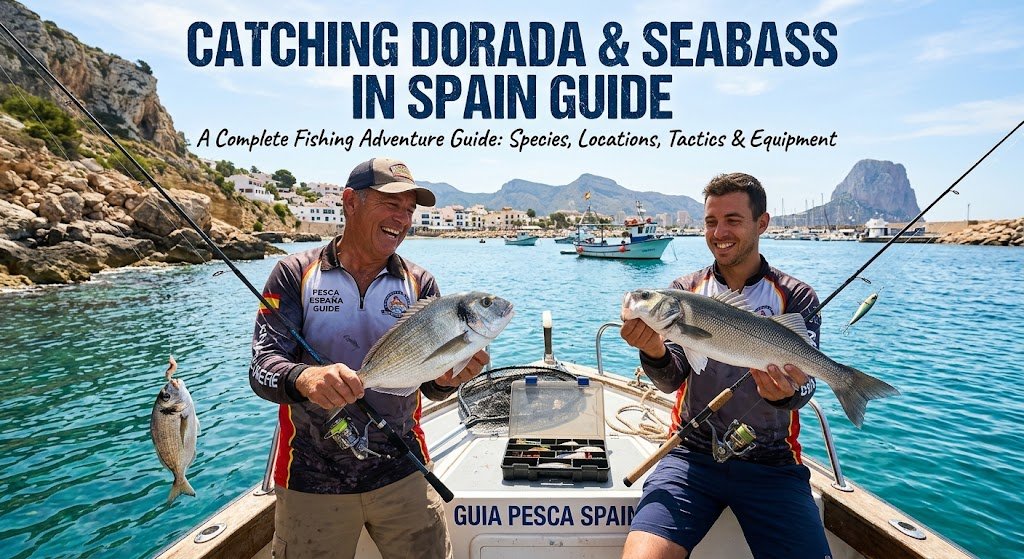
Catching Dorada & Seabass in Spain Guide

Among Mediterranean coastal sportfish, two species capture the imagination of shore anglers above all others: the wary Gilthead Seabream (Sparus aurata, or dorada) and the predatory European Sea Bass (Dicentrarchus labrax, or lubina). When it comes to catching dorada in Spain and pursuing sea bass along Costa Blanca (Alicante, Guardamar, Torrevieja), success requires specialized baits, refined terminal tackle, and the skill to read subtle underwater topography.

Both species thrive in Spanish waters, yet they display contrasting feeding habits. While dorada use powerful crushing molars to break open hard-shelled mollusks and crabs in sandy troughs, predatory sea bass hunt in foamy surf washes, stalking baitfish and swimming crabs. This guide details premier Mediterranean natural baits, tournament-tested rigs, seabed interpretation, and bite detection techniques.

Top Mediterranean Natural Baits: Analysis & Presentation

Local bait shops (tiendas de pesca) across the Spanish Mediterranean offer an impressive array of live saltwater baits. Choosing the right bait for target species and conditions is essential:

  • Lombriz de Arena (Catalana / Beach Worm): The classic Mediterranean surfcasting bait for calm summer waters. Delicate and blood-rich, it is threaded onto fine long-shank hooks using a hollow baiting needle. Exceptional for dorada and mormo (herrera) at long casting distances.
  • Tita (Sipunculid Bibi Worm): The premier big-dorada bait. Tough, leathery, and full of scented fluids. Small titas are hooked whole, while giant titas are cut into strips, turned inside-out, and wrapped tightly with lycra elastic thread to resist small bait-stealers.
  • Americano (Bloodworm): A thick, tough worm filled with vibrant red hemoglobin fluids. Highly attractive to night-hunting sea bass and specimen dorada. Puncturing the head cleanly ensures fluids are retained.
  • Coreano (Ragworm): An affordable, lively green worm with active swimming motion. Highly effective for sea bass and white bream around rocky breakwaters during daytime or murky sea conditions.
  • Navajas (Fresh Razor Clams): Natural coastal delicacy for dorada. Threaded whole (with or without shell) using two hooks and bound securely with elastic thread. The scent trail in mild surf proves irresistible.
  • Cangrejo (Shore Crabs / Calavereta): The ultimate selective bait for trophy dorada. Small shore crabs or sand crabs (calavereta) are hooked through the rear shell. Nuisance fish cannot damage it, keeping your bait intact for big fish.

Terminal Rigs for Dorada & Seabass: Plomo Corrido and URFE Systems

Dorada are famously suspicious. The moment they feel unusual resistance from a heavy lead sinker, they instantly drop the bait. Spanish surfcasters rely on two primary setups:

1. Running Ledger Rig (Plomo Corrido)

The running ledger features a hydrodynamic casting sinker running freely on the main line or tapered shock leader. A rubber bead protects a micro swivel, to which a fluorocarbon hooklength (bajo de línea) measuring 1.8 to 2.5 meters is tied. With a diameter of 0.20 mm to 0.26 mm, it remains invisible in crystal Mediterranean waters while allowing feeding fish to run without resistance.

2. URFE Clip System

The URFE system utilizes a short, rigid stainless-steel wire shaft (6 to 10 cm) with a quick-release lead clip and an upper rolling swivel. It prevents line tangles during aerodynamic pendulum casts and permits rapid sinker changes as currents shift.

  • Hooks: For dorada, forged wide-gape hooks with curved points (Chinu style, sizes 1 to 4) penetrate tough crushing jaw plates without bending. For sea bass, long-shank Aberdeen or curved octopus hooks (sizes 1/0 to 2/0) accommodate bulky worm and fish baits.

Reading the Seabed: Sandbars, Posidonia Edges, and Surf Washes

Blind casting into flat water rarely yields trophy fish. Reading seabed features makes the difference:

  • Sandbars and Troughs: Observe breaking wave patterns. Waves break over shallow sandbars and reform in deeper troughs (fondales). Dorada cruise these depressions to scavenge exposed worms and crabs.
  • Posidonia Weed Edges: Extensive meadows of Posidonia seagrass line the coast. Dorada and sea bass patrol the transition border where sand meets weed. Casting within two meters of this edge is highly productive.
  • Surf Wash & Foam Lines: European sea bass are opportunistic ambush hunters. They feed in churning white water, rip channels, and river mouths where disoriented baitfish struggle against currents.

If you prefer targeting coastal reefs and offshore underwater canyons by boat rather than casting from shore, consulting experienced skippers via SEAMEN maritime services provides access to calibrated fish-finder electronics and vessel charters.

Bite Detection and Hook Setting: Double-Tap vs Aggressive Strike

Dorada and sea bass register distinct bites on the rod tip:

  • The Dorada Bite: Starts with several sharp taps as the bream crushes bait with its back molars. Do not strike immediately! Wait for the rod tip to steadily pull down and drag begins slipping. Set the hook with a smooth, firm sweep.
  • The Seabass Strike: Sea bass feed by flaring gills to inhale prey whole. The strike is aggressive, often creating slack line or a sharp rod bend. Strike firmly to drive the hook home.

To master more Mediterranean angling tactics, explore our FreeWIND Sea Fishing section and check out our foundational overview on Mediterranean species, techniques, and charter trips.

Frequently Asked Questions About Catching Dorada & Seabass in Spain

1. What is the single best bait for catching dorada in Spain?

For trophy specimens, live shore crabs (cangrejo calavereta) and strips of giant tita worm bound with elastic thread are unbeatable. For numbers on calm summer nights, lombriz de arena (catalana worm) produces the highest bite rates.

2. What time of day is best for catching dorada from Spanish beaches?

During warm summer months (June to September), night fishing between 22:00 and 04:00 is prime. In spring and autumn, daytime angling during mild southeasterly breezes (levante) often triggers feeding.

3. Why is fluorocarbon necessary for Mediterranean surfcasting?

The Mediterranean is exceptionally clear compared to ocean waters. Standard nylon monofilament casts visible shadows, causing wary dorada to shy away. Fluorocarbon has a refractive index close to water, making your leader virtually invisible.

4. What is the minimum legal size for dorada and sea bass in Spain?

Under Valencian regulations, the minimum legal size for Gilthead Seabream (dorada) is 20 cm, while European Seabass (lubina) has a minimum size of 25 cm. Anglers are encouraged to release bass under 36 cm to support breeding stocks.

5. Should I leave the reel drag loose when fishing for dorada?

Yes. Set your front drag light or engage a baitrunner spool so running dorada feel minimal resistance. Once the initial run begins, cup the spool or engage fighting drag before setting the hook.

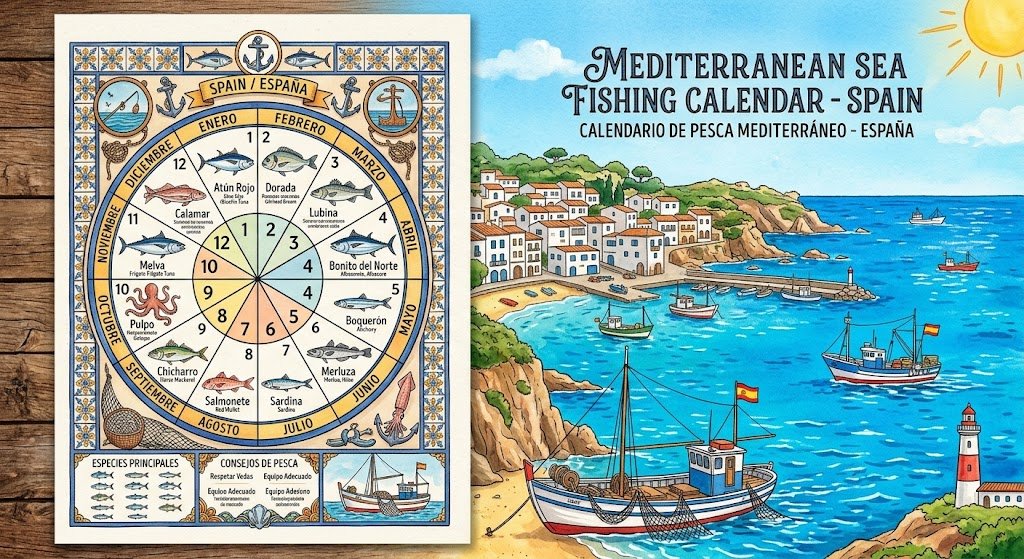
Mediterranean Sea Fishing Calendar Spain

Understanding seasonal migrations, feeding habits, and thermal cycles is the secret to successful angling along the Spanish coast. A comprehensive Mediterranean fishing calendar Spain empowers surfcasters, lure anglers, and boat skippers to target the right species at the right time. Unlike the Atlantic ocean with its massive tides, the western Mediterranean—particularly Costa Blanca (Alicante, Torrevieja, Santa Pola)—is governed by subtle water temperature shifts, micro-tides, barometric pressure, and seasonal pelagic runs.

Whether you are casting worms under summer moons, trolling for pelagics in autumn, or jigging for trophy squid in winter, timing dictates results. In this seasonal guide, we break down month-by-month angling conditions across Spain’s Mediterranean coast, detailing target species, productive tactics, and key environmental factors.

Spring (March to May): Cuttlefish, Seabass, and Early Dorada

As Mediterranean surface temperatures climb from winter lows of 14°C toward 18°C, coastal ecosystems awaken. Spring runoffs carry nutrients into coastal bays and estuaries, sparking marine activity:

  • March: Prime window for cuttlefish (sepia) over sandy weedbeds and shallows using slow-sinking squid jigs. European seabass (lubina) hunt along surf breaks and rocky points after spring storms.
  • April: The first large gilthead seabream (dorada) migrate inshore from deep winter waters to feed on shellfish. Shore anglers see early catches on beach worms (lombriz de arena) and razor clams.
  • May: White seabream (sargo) feed aggressively in the white wash of rocky breakwaters. Shore spinning with soft plastics targets active seabass and barracuda (espetón) at dawn and dusk.

Summer (June to August): Night Surfcasting, Llampuga, and Trolling

Surface waters warm to 25°C-28°C by August, creating a thermocline around 15 to 25 meters. Inshore species seek shade under posidonia weedbeds during the heat, shifting prime shore angling into the night:

  • June: Night surfcasting begins. Anglers hit Costa Blanca beaches after bathers leave (from 21:00 onwards), targeting trophy dorada and mormo (herrera) with tita worms and crabs.
  • July: Pompano (palometa) and leerfish hunt shallows, attacking surface poppers and live needlefish. Offshore, light trolling (curricán) produces mackerel (caballa) and horse mackerel (jurel).
  • August: Dolphin fish (llampuga / mahi-mahi) arrive, gathering beneath floating buoys and flotsam. Anglers target them with small surface lures. Offshore charters also pursue pelagics.

When arranging private boat charters or deep-sea excursions during summer, working with verified maritime specialists like SEAMEN nautical services provides licensed skippers, electronics, and offshore logistics.

Autumn (September to November): Pelagic Blitzes and Squid Season

Autumn is considered the premier season on the Mediterranean fishing calendar Spain. As tourist crowds depart and coastal waters cool to 20°C-22°C, predatory fish feed aggressively before winter:

  • September: Offshore feeding blitzes. Flocks of diving seabirds indicate surface-feeding schools of Atlantic bonito, little tunny (bacoreta), and frigate tuna (melva). Fast trolling and casting metal jigs into boils delivers exciting action.
  • October: Trophy dentex (dentón) and amberjack hunt drop-offs and reefs at 25 to 60 meters. Slow jigging, inchiku, and live squid trolling produce ferocious strikes.
  • November: The squid fishing (eging) season opens. European squid (Loligo vulgaris) move inshore toward breakwaters and reefs at twilight. Anglers cast Japanese jigs with darting retrieves.

Winter (December to February): Deep Bottom Fishing and Big Squid

While winter brings cooler air and northwesterly winds, water temperatures stabilize around 14°C to 15°C. Winter angling focuses on specialized shore and deep-water tactics:

  • December: Trophy squid month. Large calamari over 1 kg hunt breakwaters and rocky coves on calm, moonlit evenings.
  • January: Deep bottom fishing (pesca a fondo) from boats at 50 to 120 meters. Anglers catch blackspot seabream (besugo), pandora (pagel), and grouper using sardine baits and heavy sinkers.
  • February: Rough winter swells churn sandy shallows, dislodging crabs and clams. Surfcasters brave the surf wash after storms to land massive winter sea bass and solitary dorada.

Environmental Factors: Water Temperature, Moon Phases, and Micro-Tides

Maximizing catch rates along the Mediterranean coast requires understanding key environmental factors:

  • Water Temperature: Shifting from 14°C in February to 27°C in August. Thermocline depth dictates whether fish feed on the seabed or near the surface.
  • Micro-Tides: Mediterranean tides measure only 20 to 40 cm. Anglers watch for wind currents, groundswells (mar de fondo), and falling barometer readings that trigger feeding windows.
  • Moon Cycles: Full moon nights are prime for summer surfcasting and squid eging, while dark moon nights trigger morning feeding blitzes among pelagics.

For more tackle tactics and coastal locations, explore our FreeWIND Sea Fishing articles and read our guide to Mediterranean species, fishing techniques, and local charters.

Frequently Asked Questions About Mediterranean Sea Fishing in Spain

1. What is the best month for sea fishing in Spain?

October is widely considered the best month. Water temperatures remain warm, tourist crowds are gone, pelagics (bonito, melva, llampuga) feed near shore, dentex are active, and inshore squid season begins.

2. When can I catch Gilthead Seabream (Dorada) along Costa Blanca?

Dorada are caught from April through November, with peak trophy specimens landed during warm summer nights (June to September) using surfcasting rigs baited with crabs or tita worms.

3. What is the legal season for Bluefin Tuna in Spain?

Atlantic Bluefin Tuna is strictly regulated under catch-and-release quotas managed by the fisheries ministry. The recreational season opens in mid-June and closes once regional quotas are exhausted. Retaining tuna without special permits is illegal.

4. When is the best time for squid fishing (eging) in the Mediterranean?

Squid move into coastal waters as temperatures drop in late autumn. The peak eging season runs from November through February, especially during the two hours surrounding dusk on calm evenings.

5. Does barometric pressure affect Mediterranean fish feeding?

Yes. In micro-tidal Mediterranean waters, sudden pressure drops before weather fronts trigger strong feeding activity. Conversely, high pressure requires lighter leaders and refined bait presentation.

Sea Fishing License in Spain: Expat Guide

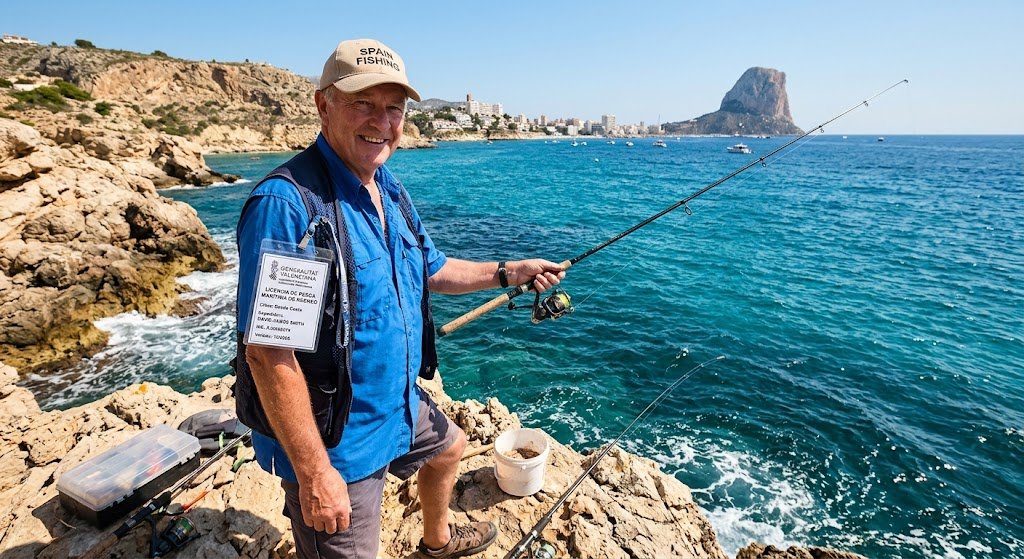
Planning to cast a line into the Mediterranean? Obtaining a legal sea fishing license in Spain is mandatory for every coastal angler, visiting tourist, and resident expat. Spain’s southeastern coastline, especially along Costa Blanca (Alicante, Torrevieja, Santa Pola), offers rich waters teeming with gilthead seabream (dorada), seabass (lubina), dentex, and bonito. However, Spanish maritime enforcement is strict. Fishing without a permit can result in heavy fines, gear confiscation, and legal sanctions from the Guardia Civil and SEPRONA.

While navigating foreign administration may seem daunting, securing your recreational maritime fishing permit (Licencia de Pesca Marítima de Recreo) is straightforward once you know the classifications, portals, and fees. This guide explains license classes, application steps in the Valencian Community, catch limits, protected zones, and conservation rules.

Types of Spanish Sea Fishing Licenses: Understanding the Classes

In the Valencian Community, recreational maritime fishing falls into three core classes, plus collective charter options:

  • Clase 1: Recreativa desde Tierra (Shore Fishing): Covers angling from beaches, rocky shores, cliffs, and permitted breakwaters using up to two rods with maximum three hooks each.
  • Clase 2: Recreativa desde Embarcación (Boat Fishing): Required when fishing from private motor boats, sailboats, or kayaks, covering trolling (curricán) and bottom angling.
  • Clase 3: Recreativa Submarina (Spearfishing): Allows breath-hold apnea spearfishing only (scuba is strictly banned). Requires a medical certificate and federation civil insurance.
  • Commercial Charter Exemption: Certified charter boats operate under a collective license covering all clients on board. When arranging deep-sea fishing trips or vessel charters, booking with trusted specialists like SEAMEN maritime services guarantees full compliance without needing an individual boat permit.

Requirements and Documents for Expats & Non-Residents

Any foreign citizen can apply for a sea fishing license in Spain without permanent residency. You simply require:

  • Passport or NIE: Both Spanish NIE and foreign passports are fully accepted on official application portals.
  • Contact Address: A local holiday home, rental, or hotel address suffices for the application form.
  • Age Verification: Minimum age is 16 years (or 14 with signed parental authorization).
  • Medical Certificate (Spearfishing only): Official doctor’s certificate issued within 90 days by an authorized medical center (check the guide to maritime and sports medical examination centers in Alicante & Torrevieja).

Step-by-Step: Applying for Your Sea Fishing License Online

The regional authority (Generalitat Valenciana) manages applications through the PROP citizen platform:

Option 1: Online with Digital Certificate or Cl@ve

If you possess a Spanish digital certificate or Cl@ve PIN, log into the Generalitat portal, choose Licencia de Pesca Marítima de Recreo, complete personal details, pay the administrative fee by card, and immediately download your official PDF license.

Option 2: Without Digital Certificate via Form 046

For visiting tourists and expats without digital ID:

  1. Access the Generalitat tax portal (Tributos Modelo 046).
  2. Select Fee Code 9838 (Tasas por servicios de pesca marítima de recreo).
  3. Choose license modality (Clase 1 shore or Clase 2 boat) and validity period.
  4. Enter passport details and generate the 3-part Form 046.
  5. Pay the fee at any local bank (CaixaBank, BBVA, Santander) or local ATM.
  6. Submit the stamped receipt and passport at a local PROP or agricultural office (OCA) in Alicante or Torrevieja to collect your card.

Fees, Validity, and Regional Recognition

Recreational fishing permits along Costa Blanca are very affordable:

  • Shore License (Clase 1): Costs €12 to €28 depending on duration (1 to 5 years). Retirees over 65 often qualify for fee exemptions.
  • Boat License (Clase 2): Approximately €25 to €45 for up to 3 years.
  • Inter-Autonomous Reciprocity: A shore license issued in Valencia is recognized across Murcia, Andalucia, Catalonia, and the Balearic Islands, subject to local reserve rules.

Mediterranean Rules, Bag Limits, and Marine Reserves

Holding a license requires strict adherence to environmental protections:

  • Daily Bag Limit: 5 kg of fish plus one single larger fish per angler per day. Catch and release is strongly encouraged once personal food limits are reached.
  • Non-Commercial Only: Selling recreational catches to individuals, markets, or restaurants is illegal and heavily fined.
  • Minimum Sizes (Tallas Mínimas): Undersized fish must be released unharmed immediately: Dorada (20 cm), Lubina (25 cm), Sargo (15 cm), Salmonete (11 cm).
  • Prohibited Zones: Angling is strictly forbidden inside commercial ports, marinas, and marine reserves (e.g., Isla de Tabarca). During summer, beach fishing is allowed only outside bathing hours (typically 21:00 to 09:00).

Guardia Civil & SEPRONA Enforcement: Penalties and Fines

The maritime Guardia Civil and SEPRONA actively patrol shorelines and waters:

  • Minor Infractions: Not carrying your license card or exceeding rod counts (€60 to €300).
  • Serious Infractions: Fishing without a valid license, keeping undersized fish, or fishing in marine sanctuaries (€301 to €3,000, plus confiscation of rods and tackle).
  • Very Serious Infractions: Commercial sale of catches or landing protected bluefin tuna without state authorization (up to €60,000).

For more coastal advice and regional tackle guides, visit our FreeWIND Sea Fishing guides and explore our primer on Mediterranean species, techniques, and local charters.

Frequently Asked Questions About Sea Fishing Licenses in Spain

1. Do tourists need a sea fishing license in Spain for a short vacation?

Yes. All anglers casting from beaches, breakwaters, or private boats must hold a valid license regardless of holiday duration. There are no temporary tourist exemptions.

2. Does a Valencian fishing license work in Murcia or Andalucia?

Yes. Spain maintains mutual recognition across autonomous communities for shore fishing (Clase 1), provided you obey each region’s local reserve boundaries and minimum sizes.

3. Do I need an individual license on a private fishing charter?

No. Authorized charter boats carry a collective commercial license that covers all passengers on board. For verified boat charters and marine logistics, consult professional teams like SEAMEN.

4. Do children need a fishing license in Spain?

In the Valencian Community, children under 14 do not need their own permit when fishing alongside a licensed adult who assumes supervision and counts the catch within the daily bag limit.

5. Can I harvest octopus (pulpo) from coastal rocks?

In Valencia, recreational capture of octopus is strictly controlled and prohibited during specific seasonal closures. Taking octopus out of season incurs substantial fines from SEPRONA.

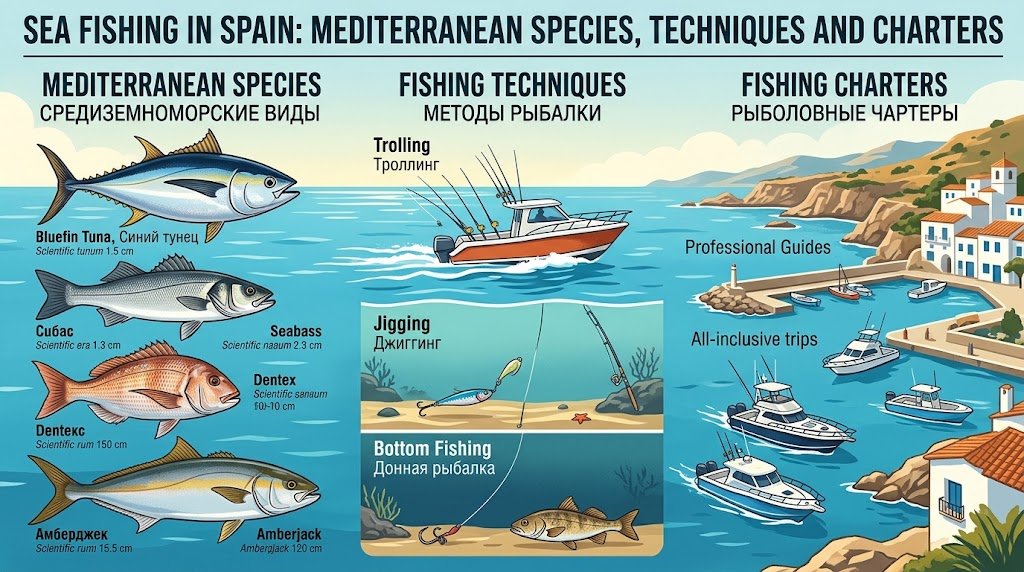
Sea Fishing in Spain: Mediterranean Species, Techniques and Charters

From bottom fishing for sea bream to high-thrill trolling for bonito and tuna, sea fishing in Spain provides an adrenaline-packed maritime adventure for beginners and experienced anglers alike.

Mediterranean Sea Fishing: What Can You Catch in Spain?

The waters of Costa Blanca and the western Mediterranean are rich with diverse marine life. Depending on the season and fishing technique, common catches include:

  • Gilthead Seabream (Dorada) & Sea Bass (Lubina): Highly prized table fish found near rocky shores, ports, and sandy shallows.
  • Atlantic Bonito & Little Tunny: Voracious predatory pelagic species caught by trolling spoons, plugs, or casting jigs in deeper offshore drop-offs during summer and autumn.
  • Dentex (Dentón) & Grouper (Mero): Fierce fighters inhabiting deep reef structures, caught by slow jigging or live bait bottom fishing.
  • Squid (Calamar) & Cuttlefish (Sepia): Popular targeted species during autumn and winter evenings using egi squid jigs.

Spanish Fishing Licenses & Regulations

In Spain, maritime recreational fishing requires a recreational fishing license (Licencia de Pesca Marítima de Recreo) issued by the regional autonomous community (e.g., Generalitat Valenciana). When booking an organized boat fishing charter, the vessel’s commercial license typically covers all passengers on board.

Charter vs. Self-Drive Fishing Boat

If you have experience, renting a motor boat equipped with a fish finder (sonar) lets you explore coastal reefs at your own pace. For offshore big game or pelagic trolling, booking an experienced local skipper with tackle and bait included guarantees finding the productive underwater canyons and feeding zones.