
Catching Dorada & Seabass in Spain Guide
Among Mediterranean coastal sportfish, two species capture the imagination of shore anglers above all others: the wary Gilthead Seabream (Sparus aurata, or dorada) and the predatory European Sea Bass (Dicentrarchus labrax, or lubina). When it comes to catching dorada in Spain and pursuing sea bass along Costa Blanca (Alicante, Guardamar, Torrevieja), success requires specialized baits, refined terminal tackle, and the skill to read subtle underwater topography.
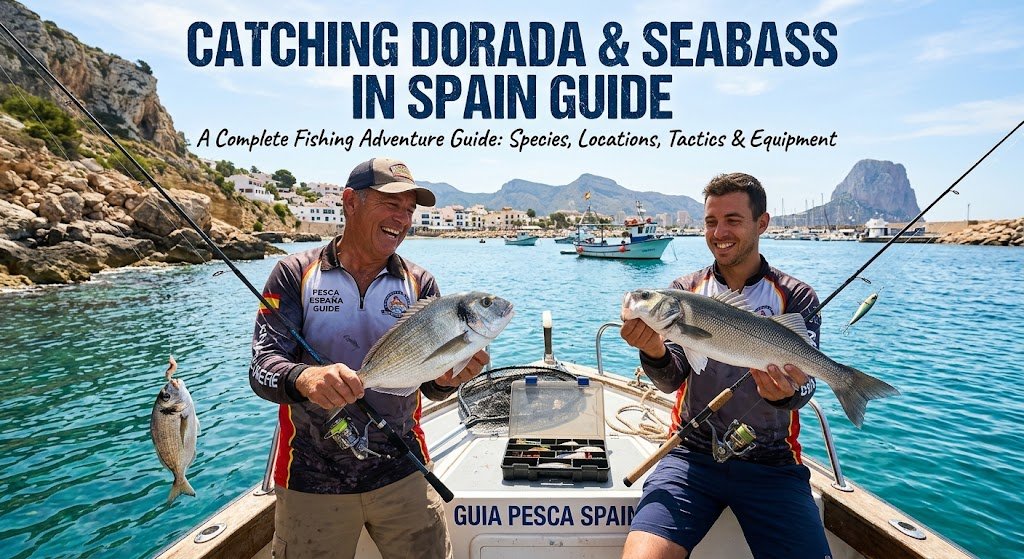
Both species thrive in Spanish waters, yet they display contrasting feeding habits. While dorada use powerful crushing molars to break open hard-shelled mollusks and crabs in sandy troughs, predatory sea bass hunt in foamy surf washes, stalking baitfish and swimming crabs. This guide details premier Mediterranean natural baits, tournament-tested rigs, seabed interpretation, and bite detection techniques.
Top Mediterranean Natural Baits: Analysis & Presentation
Local bait shops (tiendas de pesca) across the Spanish Mediterranean offer an impressive array of live saltwater baits. Choosing the right bait for target species and conditions is essential:
- Lombriz de Arena (Catalana / Beach Worm): The classic Mediterranean surfcasting bait for calm summer waters. Delicate and blood-rich, it is threaded onto fine long-shank hooks using a hollow baiting needle. Exceptional for dorada and mormo (herrera) at long casting distances.
- Tita (Sipunculid Bibi Worm): The premier big-dorada bait. Tough, leathery, and full of scented fluids. Small titas are hooked whole, while giant titas are cut into strips, turned inside-out, and wrapped tightly with lycra elastic thread to resist small bait-stealers.
- Americano (Bloodworm): A thick, tough worm filled with vibrant red hemoglobin fluids. Highly attractive to night-hunting sea bass and specimen dorada. Puncturing the head cleanly ensures fluids are retained.
- Coreano (Ragworm): An affordable, lively green worm with active swimming motion. Highly effective for sea bass and white bream around rocky breakwaters during daytime or murky sea conditions.
- Navajas (Fresh Razor Clams): Natural coastal delicacy for dorada. Threaded whole (with or without shell) using two hooks and bound securely with elastic thread. The scent trail in mild surf proves irresistible.
- Cangrejo (Shore Crabs / Calavereta): The ultimate selective bait for trophy dorada. Small shore crabs or sand crabs (calavereta) are hooked through the rear shell. Nuisance fish cannot damage it, keeping your bait intact for big fish.
Terminal Rigs for Dorada & Seabass: Plomo Corrido and URFE Systems
Dorada are famously suspicious. The moment they feel unusual resistance from a heavy lead sinker, they instantly drop the bait. Spanish surfcasters rely on two primary setups:
1. Running Ledger Rig (Plomo Corrido)
The running ledger features a hydrodynamic casting sinker running freely on the main line or tapered shock leader. A rubber bead protects a micro swivel, to which a fluorocarbon hooklength (bajo de línea) measuring 1.8 to 2.5 meters is tied. With a diameter of 0.20 mm to 0.26 mm, it remains invisible in crystal Mediterranean waters while allowing feeding fish to run without resistance.
2. URFE Clip System
The URFE system utilizes a short, rigid stainless-steel wire shaft (6 to 10 cm) with a quick-release lead clip and an upper rolling swivel. It prevents line tangles during aerodynamic pendulum casts and permits rapid sinker changes as currents shift.
- Hooks: For dorada, forged wide-gape hooks with curved points (Chinu style, sizes 1 to 4) penetrate tough crushing jaw plates without bending. For sea bass, long-shank Aberdeen or curved octopus hooks (sizes 1/0 to 2/0) accommodate bulky worm and fish baits.
Reading the Seabed: Sandbars, Posidonia Edges, and Surf Washes
Blind casting into flat water rarely yields trophy fish. Reading seabed features makes the difference:
- Sandbars and Troughs: Observe breaking wave patterns. Waves break over shallow sandbars and reform in deeper troughs (fondales). Dorada cruise these depressions to scavenge exposed worms and crabs.
- Posidonia Weed Edges: Extensive meadows of Posidonia seagrass line the coast. Dorada and sea bass patrol the transition border where sand meets weed. Casting within two meters of this edge is highly productive.
- Surf Wash & Foam Lines: European sea bass are opportunistic ambush hunters. They feed in churning white water, rip channels, and river mouths where disoriented baitfish struggle against currents.
If you prefer targeting coastal reefs and offshore underwater canyons by boat rather than casting from shore, consulting experienced skippers via SEAMEN maritime services provides access to calibrated fish-finder electronics and vessel charters.
Bite Detection and Hook Setting: Double-Tap vs Aggressive Strike
Dorada and sea bass register distinct bites on the rod tip:
- The Dorada Bite: Starts with several sharp taps as the bream crushes bait with its back molars. Do not strike immediately! Wait for the rod tip to steadily pull down and drag begins slipping. Set the hook with a smooth, firm sweep.
- The Seabass Strike: Sea bass feed by flaring gills to inhale prey whole. The strike is aggressive, often creating slack line or a sharp rod bend. Strike firmly to drive the hook home.
To master more Mediterranean angling tactics, explore our FreeWIND Sea Fishing section and check out our foundational overview on Mediterranean species, techniques, and charter trips.
Frequently Asked Questions About Catching Dorada & Seabass in Spain
1. What is the single best bait for catching dorada in Spain?
For trophy specimens, live shore crabs (cangrejo calavereta) and strips of giant tita worm bound with elastic thread are unbeatable. For numbers on calm summer nights, lombriz de arena (catalana worm) produces the highest bite rates.
2. What time of day is best for catching dorada from Spanish beaches?
During warm summer months (June to September), night fishing between 22:00 and 04:00 is prime. In spring and autumn, daytime angling during mild southeasterly breezes (levante) often triggers feeding.
3. Why is fluorocarbon necessary for Mediterranean surfcasting?
The Mediterranean is exceptionally clear compared to ocean waters. Standard nylon monofilament casts visible shadows, causing wary dorada to shy away. Fluorocarbon has a refractive index close to water, making your leader virtually invisible.
4. What is the minimum legal size for dorada and sea bass in Spain?
Under Valencian regulations, the minimum legal size for Gilthead Seabream (dorada) is 20 cm, while European Seabass (lubina) has a minimum size of 25 cm. Anglers are encouraged to release bass under 36 cm to support breeding stocks.
5. Should I leave the reel drag loose when fishing for dorada?
Yes. Set your front drag light or engage a baitrunner spool so running dorada feel minimal resistance. Once the initial run begins, cup the spool or engage fighting drag before setting the hook.