
Squid Fishing (Eging) in Spain: Pro Tips
Originating in Japan and embraced across the Mediterranean, the art of eging—lure angling for cephalopods with specialized prawn jigs (egis)—has transformed coastal fishing. When targeting squid fishing in Spain along Costa Blanca (Torrevieja, Santa Pola, Alicante, Calpe), anglers discover an exciting discipline combining light tackle, subtle bite detection, and exquisite culinary rewards.
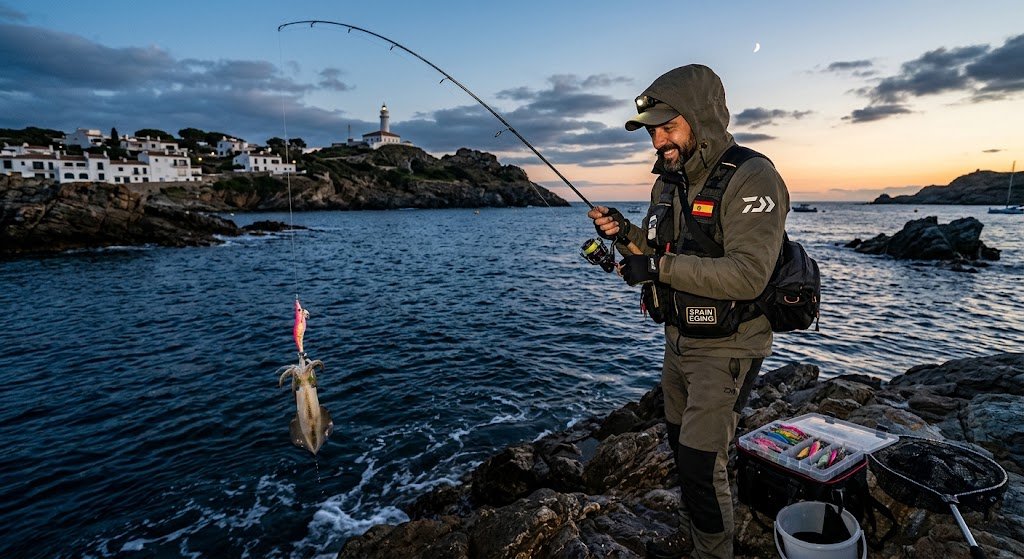
As Mediterranean waters cool from late October through February, European Common Squid (calamar) migrate from offshore depths into coastal shallows and breakwaters under cover of dusk. Adapting Japanese eging methods to Spanish conditions produces consistent action. This guide covers jig sizes, sink rates, UV glow technology, darting retrieves, and caring for your fresh catch.
Japanese Eging Adapted to Mediterranean Waters
Unlike tidal ocean shores, the Mediterranean features exceptional water clarity and subtle currents. Squid in Spanish waters are cautious, making finesse gear essential:
- Eging Rods: Sensitive 8’0″ to 8’6″ rods rated for PE 0.4 to 0.8 braids and Egi sizes #2.0 to #3.5. A responsive blank absorbs the pulsing runs of hooked squid without tearing delicate tentacles.
- Micro Braid & Leaders: Spool a 2500 reel with smooth 8-strand PE braided line (PE #0.6 to #0.8). Tie a 1.5-meter leader of 100% fluorocarbon (0.20 mm to 0.24 mm) for invisibility and abrasion resistance.
- Quick-Snap Clips: Attach jigs with a rounded, ultra-light egi snap (size #0 or #1) to preserve natural side-to-side darting action.
Egi Jig Sizes, Sink Rates, and Color Selection
Selecting the appropriate jig size and sink rate keeps your lure in the strike zone:
- Size #2.5 (10-12g): Ideal for early autumn (October/November), calm bays, and shallow weed edges. Sinks slowly at 5.0 to 5.5 seconds per meter.
- Size #3.0 (15-16g): The versatile Mediterranean workhorse for depths of 4 to 10 meters along outer breakwaters. Sinks at 3.5 to 4.0 seconds per meter.
- Size #3.5 (20-22g): Used for winter trophy squid, deeper reefs (12+ meters), boat drifting, or windy days. Sinks faster at 2.8 to 3.2 seconds per meter.
Color selection depends on lighting conditions and moon phases:
- Full Moon & Clear Water: Natural patterns (mackerel, sardine, prawn) with silver or transparent bases. Keimura (UV-reactive) bodies excel at twilight.
- New Moon & Murky Water: High-visibility luminous green or blue glow bases with pink or orange cloth.
- Dusk & Dawn: Pink, orange, and red-bellied patterns simulate distressed prey.
Rod Action: The “Bichi-Bichi” Jerk and the Critical Drop
The cardinal rule of squid fishing in Spain is that squid attack on the slow, horizontal descent. Master this retrieve rhythm:
- Cast & Count Down: Cast your egi and let it sink near the seabed. Count down seconds based on depth and jig sink rate.
- The Jerk Sequence: Impart two to four sharp upward rod snaps (“bichi-bichi”). This causes the jig to dart erratically, attracting squid from a distance.
- The Controlled Fall: Lower the rod tip with light line tension, letting the egi glide downward at a 45-degree angle.
- Detecting the Bite: Cephalopod takes feel like sudden dead weight, a subtle tug, or sudden slack line as tentacles grip the lure.
- The Sweep Set: Avoid violent strikes. Lift firmly and reel steadily. The needle crowns (coronas) will penetrate cleanly. Keep steady tension without pumping the rod.
Top Coastal Locations and Boat Drifting Tactics
Costa Blanca offers prime eging environments during cooler months:
- Breakwaters and Outer Walls: Ports in Torrevieja, Santa Pola, and Alicante provide deep water access. Focus on transition zones where port lights meet dark water. Note: Always fish permitted outer breakwaters; operational dock basins are off-limits.
- Rocky Capes and Points: Cabo de las Huertas and Cabo Cervera create tidal eddies where squid gather to hunt.
- Boat Drifting: Over 15 to 30 meter sandy gravel beds, deploy a sea anchor (ancla de capa) to slow drift while working jigs. For private boat charters and skipper support, consult verified experts at SEAMEN maritime services.
Caring for Your Catch: From Dispatch to Plancha
Fresh Mediterranean squid deserves culinary care:
- Humane Dispatch (Ikejime): Insert a squid spike between the eyes. The squid turns white instantly, preserving natural sweetness and texture.
- Avoid Fresh Water: Keep squid dry in a cooler with ice packs inside a sealed plastic bag. Washing with chlorinated tap water ruins delicate skin texture.
- Calamar a la Plancha: Sear briefly on a screaming-hot griddle with extra-virgin olive oil, coarse sea salt, garlic, and parsley for two minutes per side.
For more coastal fishing advice, visit our FreeWIND Sea Fishing section and read our overview on Mediterranean species, techniques, and charter trips.
Frequently Asked Questions About Squid Fishing in Spain
1. When is the peak season for squid fishing (eging) in Spain?
The season runs from late October through February, peaking in November and December when large winter calamari approach coastal breakwaters to hunt and spawn.
2. What is the difference between squid (calamar) and cuttlefish (sepia)?
Squid swim actively in the water column and strike falling lures. Cuttlefish dwell directly on sandy beds and weed edges, requiring jigs dragged or hopped slowly along the bottom.
3. Why do squid jigs use barbless crown needles instead of treble hooks?
Squid have soft, muscular tentacles that tear on barbed hooks. Fine circular crown needles distribute tension evenly, keeping the squid secure under steady reeling without ripping flesh.
4. Is night fishing better than daytime for squid in Spain?
Yes. Shore eging is primarily nocturnal. The two hours after dusk and calm moonlit midnight hours produce the highest activity, as squid move into shallower water to feed.
5. Do I need a fishing license to catch squid in Spain?
Yes. Squid are regulated under regional recreational maritime fishing laws. A standard Class 1 (shore) or Class 2 (boat) license is required across all Spanish autonomous communities.