
Surfcasting vs Boat Fishing in Spain
Choosing between shore-based angling and offshore vessel expeditions is one of the most common dilemmas for anglers arriving on the Iberian Peninsula. When weighing surfcasting vs boat fishing Spain along the sun-drenched waters of Costa Blanca (Alicante, Torrevieja, Santa Pola), both modalities deliver exhilarating sport, but they demand vastly different financial investments, tackle configurations, legal permits, and tactical knowledge.
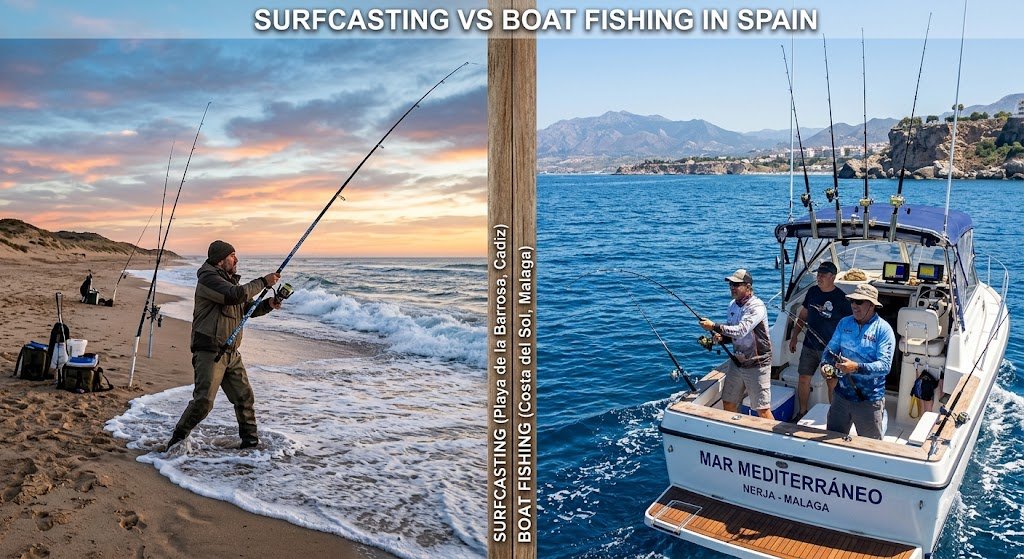
While surfcasting allows you to walk onto a golden Mediterranean beach at sunset with rod holders and sand spikes, boat angling grants access to deep drop-offs, underwater canyons, and offshore pelagics beyond casting range. This guide compares expenses, target species, summer regulations, gear essentials, and practical trade-offs to help you decide which style suits your maritime adventure.
Surfcasting in Spain: Beach Logistics and Coastal Regulations
Surfcasting enjoys immense popularity across Spain. With thousands of kilometers of coastline, finding accessible sandy beaches and shingle shores is easy. However, shore angling comes with distinct logistical considerations:
- Summer Curfews (Bathing Season Regulations): During peak tourism months (June to September), Spanish municipal ordinances strictly ban beach angling during daytime bathing hours. Surfcasting is permitted only between 21:00 and 09:00 (or once municipal lifeguards lower flags and swimmers depart). This turns summer surfcasting into a nocturnal pursuit under moonlit skies.
- Casting Distance & Mechanics: Mediterranean beaches often shelve gently. Reaching productive feeding zones (100 to 160 meters offshore) requires 4.2 to 4.5-meter three-piece carbon rods, low-diameter mainlines (0.14 mm to 0.18 mm nylon with tapered shock leaders), and aerodynamic casting techniques like the Off-The-Ground (OTG) or pendulum cast.
- Beach Mobility: Experienced surfcasters utilize heavy-duty beach carts (carros de pesca) with balloon sand wheels to haul long rod holders (pinchos), tackle boxes, bait coolers, and folding chairs across soft sand.
Boat Fishing in Spain: Sonar Tactics, Drift, and Pelagics
Heading out onto Mediterranean waters by motor vessel or sports fishing boat bypasses coastal beach crowds and opens up entirely new marine territories:
- Access to Deep Structure: Depth drops rapidly off capes like Cabo de Santa Pola and Cabo Cervera. Boat anglers easily reach rocky reefs, wrecks, and drop-offs at depths from 30 to over 150 meters, holding apex predators that never venture near surf beaches.
- Marine Electronics: Modern CHIRP sonar, GPS chartplotters, and down-scan imaging eliminate guesswork, pinpointing baitfish schools, underwater drop-offs, and bottom transitions accurately.
- Anchoring vs Drift Fishing: Depending on wind and current, skippers anchor over isolated pinnacles or deploy a sea anchor (ancla de capa) to control drift speed while slow jigging, working inchiku lures, or bottom bouncing natural sardine baits.
- Pelagic Trolling (Curricán): High-speed offshore trolling allows boats to cover miles of open sea, intercepting migratory pelagic schools of Atlantic bonito, mahi-mahi (llampuga), and albacore.
If you do not own a vessel in Spain, maintaining private boats, marina berths, insurance, and fuel can be demanding. Booking a skippered charter or hiring a well-equipped vessel through verified providers like SEAMEN maritime services provides full offshore access with expert guidance and zero ownership overhead.
Species Accessibility Breakdown: Beach vs Offshore
The species you can expect to encounter differ substantially between the two disciplines:
- Surfcasting Primary Targets: Gilthead Seabream (dorada), Sand Steenbras (herrera), European Seabass (lubina), White Seabream (sargo), flatfish, and coastal rays. These species forage in sandy depressions and surf breaks.
- Boat Angling Primary Targets: Dentex (dentón), Dusky Grouper (mero), Red Pandora (pagel), Blackspot Seabream (besugo), Atlantic Bonito, Little Tunny (bacoreta), Mahi-mahi (llampuga), and Amberjack (serviola).
Gear, Licensing, and Financial Investment Comparison
Budget and logistics play a major role when deciding between shore and boat fishing:
- Licensing: Surfcasting requires an individual Clase 1 shore license (€12 to €28 for several years). Boat angling requires a Clase 2 boat license (or booking a commercial vessel with a collective charter license).
- Surfcasting Investment: A competitive two-rod beach setup (quality 4.2m rods, high-capacity surf reels, line, tripod/spikes, beach cart, and terminal tackle) costs between €350 and €900. Ongoing expenses are minimal, limited to fresh worms, lead sinkers, and hooks.
- Boat Angling Investment: Boat ownership involves substantial recurring costs: vessel purchase, mooring fees in local marinas (€2,000 to €6,000+ annually), engine servicing, fuel, and safety gear. Alternatively, chartering a private sports fishing boat for a half-day costs between €400 and €800, split among friends.
The Hybrid Approach: Which Style Should You Choose?
For visiting anglers, expats, and residents along Costa Blanca, a hybrid strategy offers the best of both worlds:
- Weekly Shore Sessions: Invest in a reliable surfcasting or coastal spinning outfit for spontaneous evening sessions after work or weekend night trips along local beaches.
- Seasonal Offshore Charters: When the autumn pelagic migration arrives (September to November), pool resources with fellow anglers to charter a dedicated fishing boat for offshore bonito and dentex.
To learn more about Mediterranean fishing methods and gear selection, explore our FreeWIND Sea Fishing section and read our overview on Mediterranean species, techniques, and charter trips.
Frequently Asked Questions About Surfcasting vs Boat Fishing in Spain
1. Can I fish from beaches during the day in summer in Spain?
Generally no. Between June and September, municipal beach regulations prohibit angling while swimmers and sunbathers are present. Fishing is allowed only from 21:00 to 09:00, or in remote rocky coves away from official bathing zones.
2. Is boat fishing more productive than surfcasting in the Mediterranean?
Boat fishing typically yields higher numbers and larger pelagic species (bonito, dentex, grouper) because vessels access deep structure. However, surfcasting remains the premier method for targeting specimen dorada and sea bass in surf shallows.
3. Do I need separate licenses for surfcasting and boat fishing in Spain?
Yes. Spanish maritime recreational permits are divided into Clase 1 (from shore) and Clase 2 (from boat). If you fish from both the beach and your own private vessel, you must hold both endorsements.
4. Can I use a kayak for sea fishing in Spain?
Yes, kayak fishing is very popular. You must hold a Clase 2 (boat) recreational license, wear a certified life vest, carry mandatory safety gear, and remain within approved coastal distances.
5. Where can I find professional fishing boat charters on Costa Blanca?
Reputable maritime platforms like SEAMEN connect anglers with certified boat skippers, vessel charters, and marine logistics in Alicante, Torrevieja, and surrounding marinas.