
Driving a Boat in Spain Without a License
Dreaming of cruising the Mediterranean, feeling the sea breeze, and anchoring in secluded coves along the Costa Blanca? You might think skippering a vessel requires formal nautical academy courses and captain licenses. Fortunately, Spanish maritime regulations make sea life accessible: you can legally drive a boat in Spain without a license under specific statutory conditions.
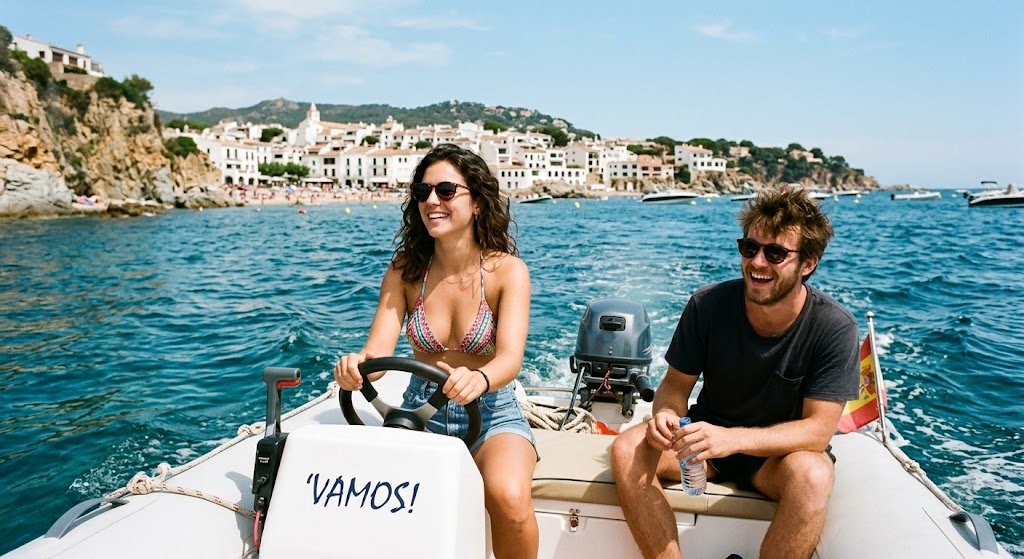
Whether holidaying in Torrevieja, Santa Pola, or Alicante, license-free boats (barcos sin titulación) offer true maritime freedom. However, commanding any motorboat involves safety obligations and legal boundaries enforced by the Coast Guard (Guardia Civil del Mar) and Capitanía Marítima. Here is your complete guide to regulations, safety gear, and top routes.
Legal Rules to Drive a Boat in Spain Without a License
Recreational boating in Spain is governed by national maritime law under Real Decreto 875/2014, de 10 de octubre. Article 10 defines the exact vessel parameters exempt from licensing:
- Maximum Length: Motorboats must not exceed 5.0 meters in hull length (6.0 meters for sailboats).
- Maximum Engine Power: Engine output cannot exceed 11.2 kW (15 HP / CV). Any motor above 15 HP requires a certified license, regardless of boat size.
- Daylight Hours Only: Navigation is permitted strictly from sunrise to sunset (orto a ocaso). Night sailing without a license and navigation lights is illegal.
- 2 Nautical Mile Boundary: Vessels must remain within 2 nautical miles of a marina, port, or accessible coastal shelter (lugar de abrigo). Open sea crossings are prohibited.
- Minimum Age: The skipper must be at least 18 years old (or 16 with written parental authorization).
Types of License-Free Boats Available
Modern license-exempt rental fleets on the Costa Blanca offer reliable, modern hulls designed for stability and fuel efficiency:
Rigid Inflatable Boats (RIBs / Semirrígidas)
Measuring 4.2 to 4.8 meters, RIBs feature tough inflatable tubes and deep-V fiberglass hulls. They provide unsinkable buoyancy and absorb wave chop smoothly. Powered by 15 HP four-stroke outboards, they cruise comfortably at 8 to 12 knots with 4 to 5 passengers.
Fiberglass Center-Console Boats
Open fiberglass runabouts feature bow solariums, bimini sunshades, swim ladders, and dry lockers. With higher freeboards, they keep spray out and offer ideal setups for sunbathing, swimming, and family coastal outings.
Mandatory Safety Equipment Required by Capitanía Marítima
As skipper, you are legally responsible for safety on board. Always verify that your boat carries required gear before untying lines:
- Life Jackets (Chalecos Salvavidas): CE/SOLAS-approved (100N minimum) for 100% of passengers, with proper sizes for children.
- Kill-Switch Lanyard (Hombre al Agua): Red spiral cord connected to the engine kill switch. Wear it around your wrist or life vest whenever the engine runs.
- Bailing System: Manual bailer (achicador) or operational electric bilge pump.
- Oars or Paddle: Auxiliary propulsion in case of mechanical breakdown.
- Sound Signal: Marine foghorn or whistle to signal in reduced visibility.
- Ground Tackle: Anchor with chain lead and rope line (minimum 3 times water depth).
- Fire Extinguisher: Portable 21B extinguisher if the boat has an enclosed tank or engine compartment.
Essential Navigation Rules & Maritime Etiquette
Navigating safely requires following international collision regulations (COLREGs) and coastal environmental laws:
- Bathing Zones: Keep at least 200m away from sandy beaches and 50m from rocky shorelines. Never enter yellow buoy swim zones. Only use designated boat channels (canales de varada) at under 3 knots.
- Harbor Limits: Speed inside ports and marinas like Torrevieja or Santa Pola is restricted to 3 knots. Wake creation is strictly penalized.
- Right of Way: Motorboats yield to sailboats and non-motorized paddle craft. When meeting head-on, both boats alter course to starboard (right). In crossing paths, give way to vessels on your starboard side.
Top Costa Blanca Routes for License-Free Boats
The protected coastline around Alicante and Torrevieja features idyllic cruising grounds within the 2-mile limit:
- Torrevieja to Cala Ferris: Head south past the harbor to reach the palm-fringed sands of Cala Ferris. Anchor on sandy patches in 3m depth for superb snorkeling.
- Santa Pola to Cabo Headland: Cruise east beneath towering cliffs towards the Santa Pola lighthouse for calm, clear swimming waters sheltered from westerly breezes.
- Torrevieja North to Cabo Cervera: A scenic northbound route past historical coastal watchtowers, offering rocky reefs teeming with Mediterranean marine life.
Upgrading Your Boating License in Spain
A 15 HP boat is the ultimate introduction to seamanship. When you are ready to pilot larger boats, cruise offshore, navigate at night, or cross to Tabarca Island, consider getting an official nautical license like the Licencia de Navegación (Titulín—6-hour course with no exam) or the comprehensive PER (Patrón de Embarcaciones de Recreo).
For accredited skipper licensing, boat documentation, and maritime management, consult our partners at SEAMEN.es. Explore more coastal guides and community trips on our FreeWIND Motor Boats hub.
Frequently Asked Questions (FAQ)
Can foreign tourists drive a boat in Spain without a license?
Yes. The exemption under Real Decreto 875/2014 applies to all nationalities. Presenting a valid passport or national ID and being at least 18 years old is sufficient to charter and operate an eligible craft.
How fast can a 15 HP license-free boat cruise?
With 2 to 4 adults aboard, a 15 HP motorboat typically cruises between 8 and 12 knots (15 to 22 km/h). This speed provides comfortable, scenic cruising with minimal fuel consumption.
What are the fines for sailing beyond 2 miles or after sunset?
Navigating further than 2 nautical miles from shelter or operating after dark without a license constitutes a serious maritime violation. Fines from Capitanía Marítima start at €1,500 and increase depending on conditions and safety infractions.
Are alcohol limits enforced on license-free boats in Spain?
Yes. The Guardia Civil del Mar enforces identical limits to road traffic: 0.5 g/l blood alcohol or 0.25 mg/l breath alcohol. Operating while impaired triggers severe fines and vessel impoundment.
Where am I allowed to anchor safely?
You can anchor outside marked bathing areas (200m from beaches). Always drop anchor in clear sand, never on protected Posidonia oceanica seagrass beds, which is strictly prohibited and heavily fined across the Valencian Community.