
Mediterranean Sea Fishing Calendar Spain
Understanding seasonal migrations, feeding habits, and thermal cycles is the secret to successful angling along the Spanish coast. A comprehensive Mediterranean fishing calendar Spain empowers surfcasters, lure anglers, and boat skippers to target the right species at the right time. Unlike the Atlantic ocean with its massive tides, the western Mediterranean—particularly Costa Blanca (Alicante, Torrevieja, Santa Pola)—is governed by subtle water temperature shifts, micro-tides, barometric pressure, and seasonal pelagic runs.
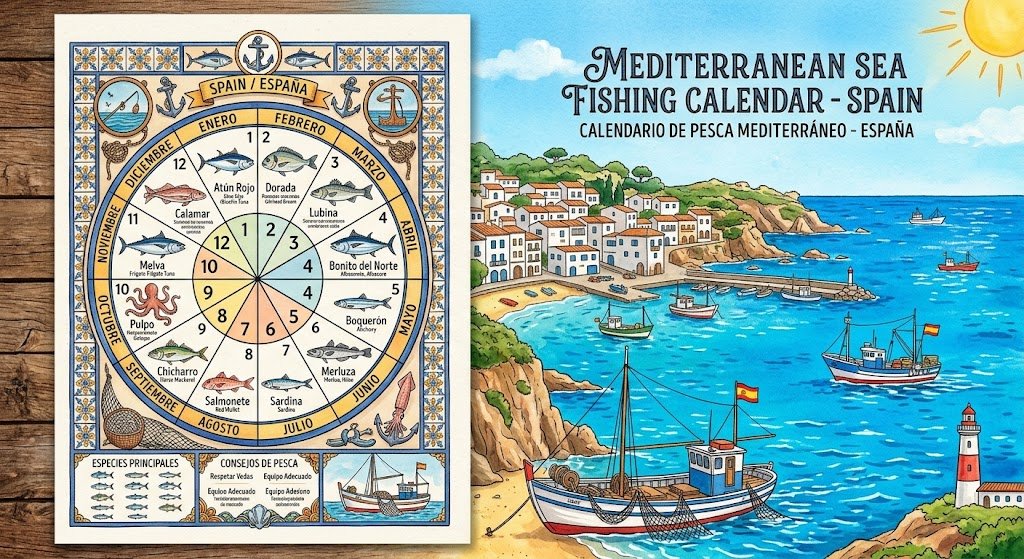
Whether you are casting worms under summer moons, trolling for pelagics in autumn, or jigging for trophy squid in winter, timing dictates results. In this seasonal guide, we break down month-by-month angling conditions across Spain’s Mediterranean coast, detailing target species, productive tactics, and key environmental factors.
Spring (March to May): Cuttlefish, Seabass, and Early Dorada
As Mediterranean surface temperatures climb from winter lows of 14°C toward 18°C, coastal ecosystems awaken. Spring runoffs carry nutrients into coastal bays and estuaries, sparking marine activity:
- March: Prime window for cuttlefish (sepia) over sandy weedbeds and shallows using slow-sinking squid jigs. European seabass (lubina) hunt along surf breaks and rocky points after spring storms.
- April: The first large gilthead seabream (dorada) migrate inshore from deep winter waters to feed on shellfish. Shore anglers see early catches on beach worms (lombriz de arena) and razor clams.
- May: White seabream (sargo) feed aggressively in the white wash of rocky breakwaters. Shore spinning with soft plastics targets active seabass and barracuda (espetón) at dawn and dusk.
Summer (June to August): Night Surfcasting, Llampuga, and Trolling
Surface waters warm to 25°C-28°C by August, creating a thermocline around 15 to 25 meters. Inshore species seek shade under posidonia weedbeds during the heat, shifting prime shore angling into the night:
- June: Night surfcasting begins. Anglers hit Costa Blanca beaches after bathers leave (from 21:00 onwards), targeting trophy dorada and mormo (herrera) with tita worms and crabs.
- July: Pompano (palometa) and leerfish hunt shallows, attacking surface poppers and live needlefish. Offshore, light trolling (curricán) produces mackerel (caballa) and horse mackerel (jurel).
- August: Dolphin fish (llampuga / mahi-mahi) arrive, gathering beneath floating buoys and flotsam. Anglers target them with small surface lures. Offshore charters also pursue pelagics.
When arranging private boat charters or deep-sea excursions during summer, working with verified maritime specialists like SEAMEN nautical services provides licensed skippers, electronics, and offshore logistics.
Autumn (September to November): Pelagic Blitzes and Squid Season
Autumn is considered the premier season on the Mediterranean fishing calendar Spain. As tourist crowds depart and coastal waters cool to 20°C-22°C, predatory fish feed aggressively before winter:
- September: Offshore feeding blitzes. Flocks of diving seabirds indicate surface-feeding schools of Atlantic bonito, little tunny (bacoreta), and frigate tuna (melva). Fast trolling and casting metal jigs into boils delivers exciting action.
- October: Trophy dentex (dentón) and amberjack hunt drop-offs and reefs at 25 to 60 meters. Slow jigging, inchiku, and live squid trolling produce ferocious strikes.
- November: The squid fishing (eging) season opens. European squid (Loligo vulgaris) move inshore toward breakwaters and reefs at twilight. Anglers cast Japanese jigs with darting retrieves.
Winter (December to February): Deep Bottom Fishing and Big Squid
While winter brings cooler air and northwesterly winds, water temperatures stabilize around 14°C to 15°C. Winter angling focuses on specialized shore and deep-water tactics:
- December: Trophy squid month. Large calamari over 1 kg hunt breakwaters and rocky coves on calm, moonlit evenings.
- January: Deep bottom fishing (pesca a fondo) from boats at 50 to 120 meters. Anglers catch blackspot seabream (besugo), pandora (pagel), and grouper using sardine baits and heavy sinkers.
- February: Rough winter swells churn sandy shallows, dislodging crabs and clams. Surfcasters brave the surf wash after storms to land massive winter sea bass and solitary dorada.
Environmental Factors: Water Temperature, Moon Phases, and Micro-Tides
Maximizing catch rates along the Mediterranean coast requires understanding key environmental factors:
- Water Temperature: Shifting from 14°C in February to 27°C in August. Thermocline depth dictates whether fish feed on the seabed or near the surface.
- Micro-Tides: Mediterranean tides measure only 20 to 40 cm. Anglers watch for wind currents, groundswells (mar de fondo), and falling barometer readings that trigger feeding windows.
- Moon Cycles: Full moon nights are prime for summer surfcasting and squid eging, while dark moon nights trigger morning feeding blitzes among pelagics.
For more tackle tactics and coastal locations, explore our FreeWIND Sea Fishing articles and read our guide to Mediterranean species, fishing techniques, and local charters.
Frequently Asked Questions About Mediterranean Sea Fishing in Spain
1. What is the best month for sea fishing in Spain?
October is widely considered the best month. Water temperatures remain warm, tourist crowds are gone, pelagics (bonito, melva, llampuga) feed near shore, dentex are active, and inshore squid season begins.
2. When can I catch Gilthead Seabream (Dorada) along Costa Blanca?
Dorada are caught from April through November, with peak trophy specimens landed during warm summer nights (June to September) using surfcasting rigs baited with crabs or tita worms.
3. What is the legal season for Bluefin Tuna in Spain?
Atlantic Bluefin Tuna is strictly regulated under catch-and-release quotas managed by the fisheries ministry. The recreational season opens in mid-June and closes once regional quotas are exhausted. Retaining tuna without special permits is illegal.
4. When is the best time for squid fishing (eging) in the Mediterranean?
Squid move into coastal waters as temperatures drop in late autumn. The peak eging season runs from November through February, especially during the two hours surrounding dusk on calm evenings.
5. Does barometric pressure affect Mediterranean fish feeding?
Yes. In micro-tidal Mediterranean waters, sudden pressure drops before weather fronts trigger strong feeding activity. Conversely, high pressure requires lighter leaders and refined bait presentation.