
Sea Fishing License in Spain: Expat Guide
Planning to cast a line into the Mediterranean? Obtaining a legal sea fishing license in Spain is mandatory for every coastal angler, visiting tourist, and resident expat. Spain’s southeastern coastline, especially along Costa Blanca (Alicante, Torrevieja, Santa Pola), offers rich waters teeming with gilthead seabream (dorada), seabass (lubina), dentex, and bonito. However, Spanish maritime enforcement is strict. Fishing without a permit can result in heavy fines, gear confiscation, and legal sanctions from the Guardia Civil and SEPRONA.
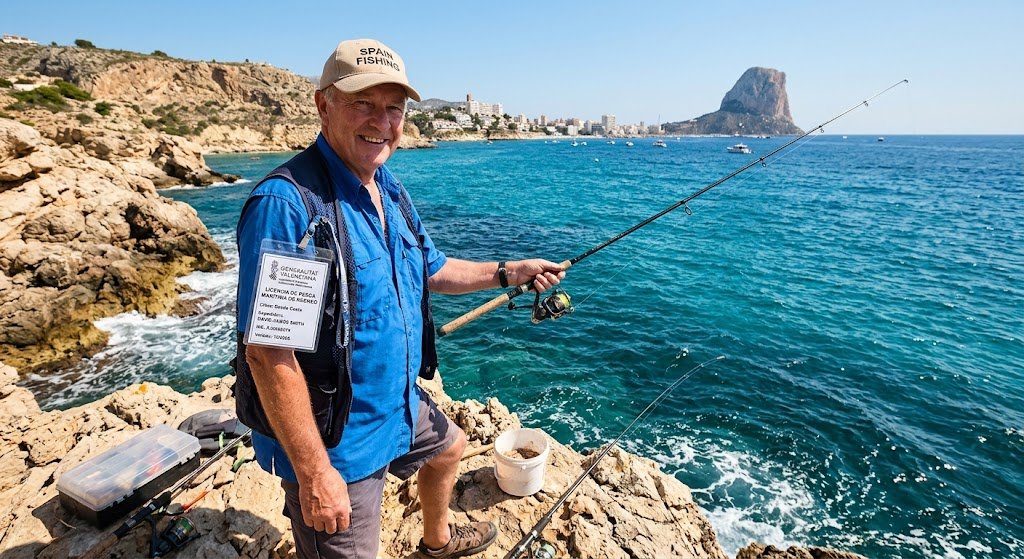
While navigating foreign administration may seem daunting, securing your recreational maritime fishing permit (Licencia de Pesca Marítima de Recreo) is straightforward once you know the classifications, portals, and fees. This guide explains license classes, application steps in the Valencian Community, catch limits, protected zones, and conservation rules.
Types of Spanish Sea Fishing Licenses: Understanding the Classes
In the Valencian Community, recreational maritime fishing falls into three core classes, plus collective charter options:
- Clase 1: Recreativa desde Tierra (Shore Fishing): Covers angling from beaches, rocky shores, cliffs, and permitted breakwaters using up to two rods with maximum three hooks each.
- Clase 2: Recreativa desde Embarcación (Boat Fishing): Required when fishing from private motor boats, sailboats, or kayaks, covering trolling (curricán) and bottom angling.
- Clase 3: Recreativa Submarina (Spearfishing): Allows breath-hold apnea spearfishing only (scuba is strictly banned). Requires a medical certificate and federation civil insurance.
- Commercial Charter Exemption: Certified charter boats operate under a collective license covering all clients on board. When arranging deep-sea fishing trips or vessel charters, booking with trusted specialists like SEAMEN maritime services guarantees full compliance without needing an individual boat permit.
Requirements and Documents for Expats & Non-Residents
Any foreign citizen can apply for a sea fishing license in Spain without permanent residency. You simply require:
- Passport or NIE: Both Spanish NIE and foreign passports are fully accepted on official application portals.
- Contact Address: A local holiday home, rental, or hotel address suffices for the application form.
- Age Verification: Minimum age is 16 years (or 14 with signed parental authorization).
- Medical Certificate (Spearfishing only): Official doctor’s certificate issued within 90 days by an authorized medical center (check the guide to maritime and sports medical examination centers in Alicante & Torrevieja).
Step-by-Step: Applying for Your Sea Fishing License Online
The regional authority (Generalitat Valenciana) manages applications through the PROP citizen platform:
Option 1: Online with Digital Certificate or Cl@ve
If you possess a Spanish digital certificate or Cl@ve PIN, log into the Generalitat portal, choose Licencia de Pesca Marítima de Recreo, complete personal details, pay the administrative fee by card, and immediately download your official PDF license.
Option 2: Without Digital Certificate via Form 046
For visiting tourists and expats without digital ID:
- Access the Generalitat tax portal (Tributos Modelo 046).
- Select Fee Code 9838 (Tasas por servicios de pesca marítima de recreo).
- Choose license modality (Clase 1 shore or Clase 2 boat) and validity period.
- Enter passport details and generate the 3-part Form 046.
- Pay the fee at any local bank (CaixaBank, BBVA, Santander) or local ATM.
- Submit the stamped receipt and passport at a local PROP or agricultural office (OCA) in Alicante or Torrevieja to collect your card.
Fees, Validity, and Regional Recognition
Recreational fishing permits along Costa Blanca are very affordable:
- Shore License (Clase 1): Costs €12 to €28 depending on duration (1 to 5 years). Retirees over 65 often qualify for fee exemptions.
- Boat License (Clase 2): Approximately €25 to €45 for up to 3 years.
- Inter-Autonomous Reciprocity: A shore license issued in Valencia is recognized across Murcia, Andalucia, Catalonia, and the Balearic Islands, subject to local reserve rules.
Mediterranean Rules, Bag Limits, and Marine Reserves
Holding a license requires strict adherence to environmental protections:
- Daily Bag Limit: 5 kg of fish plus one single larger fish per angler per day. Catch and release is strongly encouraged once personal food limits are reached.
- Non-Commercial Only: Selling recreational catches to individuals, markets, or restaurants is illegal and heavily fined.
- Minimum Sizes (Tallas Mínimas): Undersized fish must be released unharmed immediately: Dorada (20 cm), Lubina (25 cm), Sargo (15 cm), Salmonete (11 cm).
- Prohibited Zones: Angling is strictly forbidden inside commercial ports, marinas, and marine reserves (e.g., Isla de Tabarca). During summer, beach fishing is allowed only outside bathing hours (typically 21:00 to 09:00).
Guardia Civil & SEPRONA Enforcement: Penalties and Fines
The maritime Guardia Civil and SEPRONA actively patrol shorelines and waters:
- Minor Infractions: Not carrying your license card or exceeding rod counts (€60 to €300).
- Serious Infractions: Fishing without a valid license, keeping undersized fish, or fishing in marine sanctuaries (€301 to €3,000, plus confiscation of rods and tackle).
- Very Serious Infractions: Commercial sale of catches or landing protected bluefin tuna without state authorization (up to €60,000).
For more coastal advice and regional tackle guides, visit our FreeWIND Sea Fishing guides and explore our primer on Mediterranean species, techniques, and local charters.
Frequently Asked Questions About Sea Fishing Licenses in Spain
1. Do tourists need a sea fishing license in Spain for a short vacation?
Yes. All anglers casting from beaches, breakwaters, or private boats must hold a valid license regardless of holiday duration. There are no temporary tourist exemptions.
2. Does a Valencian fishing license work in Murcia or Andalucia?
Yes. Spain maintains mutual recognition across autonomous communities for shore fishing (Clase 1), provided you obey each region’s local reserve boundaries and minimum sizes.
3. Do I need an individual license on a private fishing charter?
No. Authorized charter boats carry a collective commercial license that covers all passengers on board. For verified boat charters and marine logistics, consult professional teams like SEAMEN.
4. Do children need a fishing license in Spain?
In the Valencian Community, children under 14 do not need their own permit when fishing alongside a licensed adult who assumes supervision and counts the catch within the daily bag limit.
5. Can I harvest octopus (pulpo) from coastal rocks?
In Valencia, recreational capture of octopus is strictly controlled and prohibited during specific seasonal closures. Taking octopus out of season incurs substantial fines from SEPRONA.